
The Greenwich Town Most Wanted Program
Greenwich Police posts no most-wanted roster. The home, records, crime-statistics, contact, and public-information pages carry no list either. So Greenwich Town has no published rules, reward schedule, or update cadence. The underlying work continues. The department investigates crimes, obtains arrest warrants through the Superior Court process, and serves warrants in Greenwich Town. For your own status, use the Connecticut Judicial Branch pending-case search. Confirm what it shows with the Clerk's Office, Superior Court G.A. No. 1 at Stamford. Only the court speaks with authority. No web page authorizes the public to approach or detain anyone.
Greenwich’s Most-Wanted Link Goes to ICE
The Greenwich Police Public Information page carries a "Most Wanted" link. The destination is federal: U.S. Immigration and Customs Enforcement. It is not a Greenwich Town warrant list, a Fairfield County roster, or a Connecticut Superior Court search.
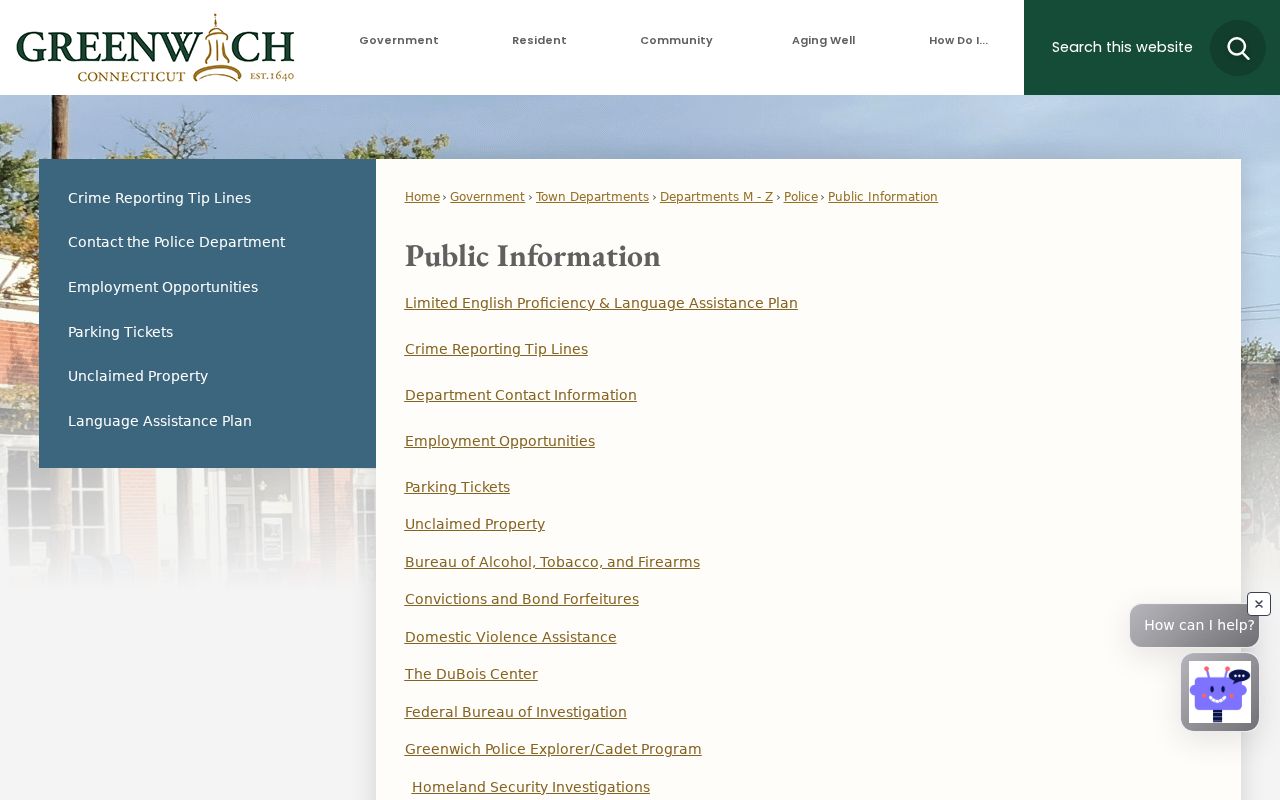
That link leaves Greenwich Town for a federal program. Federal immigration and fugitive matters run through their own agencies and courts, not a Greenwich criminal courtroom. A local case belongs with G.A. 1 at Stamford and Greenwich Police.
How the Lists Work
A most-wanted page is publicity, not an inventory. An agency picks a few priority matters while many valid capiases, rearrest warrants, failure-to-appear warrants, and arrest warrants never appear. Greenwich Town posts no roster at all. No local selection rules come with it either. For hard numbers, the state helps. Connecticut's Office of Policy and Management publishes monthly municipal arrest-warrant tables, usually around the first of the month. They count failure to appear in criminal and motor-vehicle proceedings plus violation of probation. Names, photos, birth dates, charges, bond amounts, warrant numbers, and live service status are absent. The tables give Greenwich Town context, not personal confirmation.
Note: A public list or monthly count can lag current court action, so absence from either source does not prove that no warrant exists.
Greenwich Police Tip Channels
The town's Greenwich Police tip page posts two channels: 203-622-3333 and TIPS@greenwichct.org. Both take confidential, anonymous tips about non-emergency crime. Greenwich Town police do not use them to confirm a warrant, check a court date, or recall a capias.
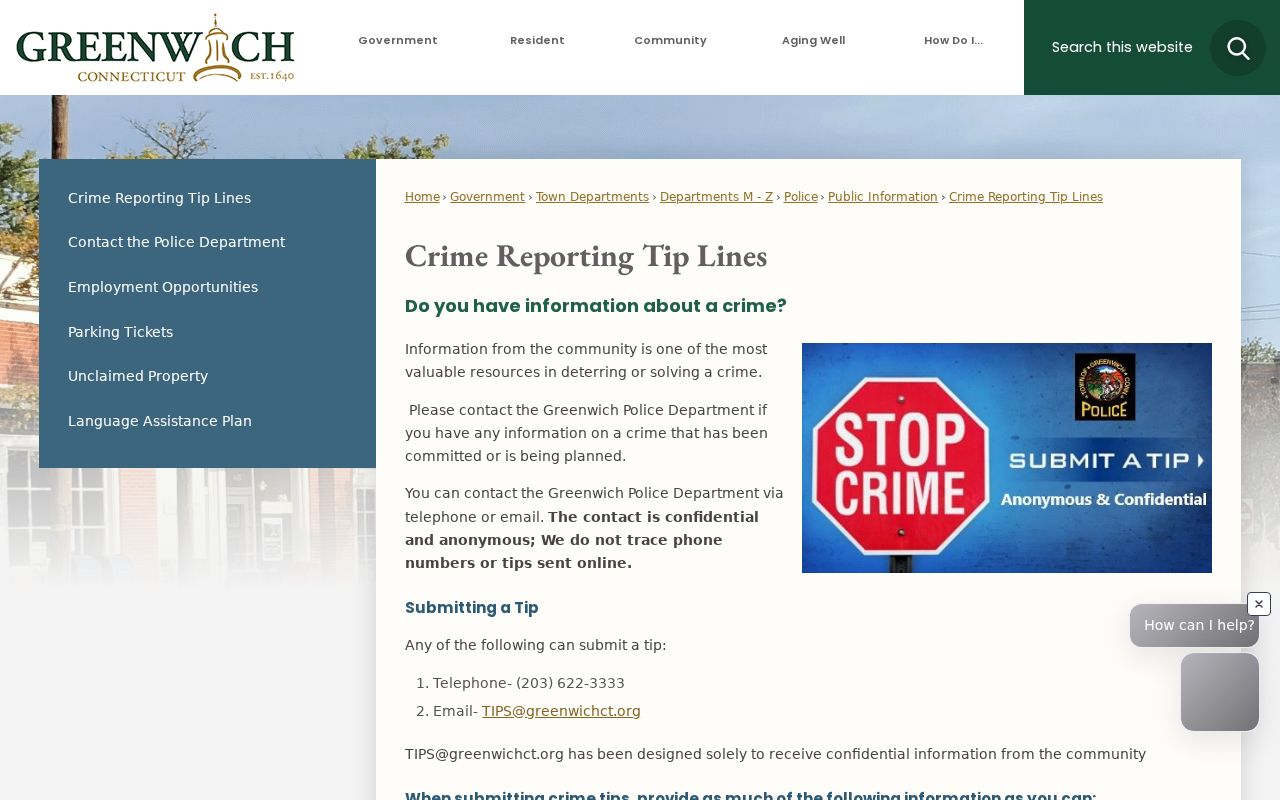
Greenwich Town asks tipsters for facts, not confrontations. Call 911 for anything urgent. A personal warrant question goes to the G.A. 1 clerk at 203-965-5208 or Greenwich Police non-emergency at 203-622-8004.
How to Report a Tip Safely
A good tip sticks to what you actually saw. Greenwich Town publishes no reward schedule for information. The channels are confidential and anonymous, and no reward or payment should ever be promised for a tip sent to the responsible agency.
- Call 911 if anyone faces immediate danger.
- For non-emergency information, use 203-622-3333 or TIPS@greenwichct.org.
- Share the place, time, conduct, and other details actually observed.
- Do not approach, follow, restrain, or attempt to arrest anyone.
- Use regular police or court contacts for your own case question.
Key Point: A crime tip may help police, but it does not confirm a warrant and does not replace the court record.
Greenwich OPM Data Is Not a Roster
OPM tabulates what agencies report. Its municipal tables split Greenwich Town counts into criminal failure to appear, motor-vehicle failure to appear, and violation of probation. The listed address reflects the record, not necessarily the person's current location.
| Geography | Municipality or address-based location used in the report |
|---|---|
| Time | Reporting month and calendar year |
| Categories | Criminal FTA, motor-vehicle FTA, and VOP counts |
| Not included | Names, photos, birth dates, charges, bonds, or live status |
OPM cannot issue, cancel, or change a warrant. Questions about an individual Greenwich Town matter go to police or the court controlling the case, because the monthly publication offers no real-time status.
Most Wanted vs an Active Warrant
"Most wanted" is a label an agency picks for publicity. An active warrant means the system still treats the legal process as enforceable. The two can overlap, but no publicity page or table shows every entry in Greenwich Town's full internal PRAWN service record.
| Feature | Most Wanted | Active Warrant |
|---|---|---|
| Scope | Selected program entries | Any enforceable warrant |
| Greenwich source | No local roster located | No public GPD roster located |
| Personal check | Do not rely on a list | Case lookup, clerk, police, or counsel |
| Status change | Publication update | Court recall, service, or disposition |
A Greenwich Town most wanted page and a warrant list serve different purposes. The Greenwich active-warrant explanation shows why a pending case and an internal service record can disagree, so treat a blank result with care.
PRAWN Is the Nonpublic Greenwich Layer
Connecticut’s Paperless Re-Arrest Warrant Network handles warrant creation, management, service, and status tracking electronically. Authorized agencies reach it through COLLECT. That system also links approved users to NCIC, NLETS, DMV, and other official files. None of it is a public Greenwich Town most wanted search.
- PRAWN
- The electronic rearrest-warrant network for authorized criminal-justice work.
- COLLECT
- The restricted communications gateway used by approved justice users.
- Public case lookup
- A pending-case display marked as not the official record.
- OPM report
- A monthly statistical publication, not individual records.
This layered setup explains the gap. Police can see service details a Greenwich Town visitor cannot, and a records request is not a live status certificate. Sealing, juvenile confidentiality, and active-investigation exceptions may further limit disclosure.
Confirm Your Own Greenwich Warrant
Begin with the Judicial Branch Criminal/Motor Vehicle Case Look-up. Type the required last-name prefix. A first initial and birth year help narrow things down. Pick Stamford Geographical Area 1, then choose Criminal or Motor Vehicle. Write down the docket, category, next event, and timestamp. Then call 203-965-5208, because the online result is not the official record. For a ticket, use the Centralized Infractions Bureau portal with the full ticket number, the check digit, and the first three letters of a surname or company name. If the answer date passed or the matter transferred, ask CIB and G.A. 1 where it sits now. Greenwich Police Records at 203-622-8024 can process a targeted request, but its five-to-seven-business-day process does not recall a warrant.
If You Believe You Are on a List
Do not lean on a federal page, a news item, an OPM count, or a third-party listing as the final word. Save your docket or ticket details. Talk with a Connecticut criminal-defense attorney, and ask the G.A. 1 clerk which court controls the process. Counsel can sort out whether an appearance, a motion, bond, or a planned surrender fits your situation. Greenwich Police cannot cancel a court capias; only the issuing court can recall or quash it. Before you head to 11 Bruce Place or 123 Hoyt Street, confirm where to report and whether the court expects same-day processing. Greenwich Town publishes no standing warrant walk-through, surrender calendar, bond window, or amnesty event. A bond may free you while the case moves ahead. It does not dismiss the case or erase the docket.
Important: Contact counsel and the responsible court before surrendering; no online list can promise release terms or same-day court action.
Greenwich Warrant Channels at a Glance
A careful Greenwich Town warrant check works best across several channels, since each office holds a different record. The public case lookup shows pending court information. CIB handles tickets before transfer. The G.A. 1 clerk controls the official court file, and Greenwich Police holds police-side records. Bring the docket, ticket, and identifying details that set your case apart. Ask the clerk whether the record shows a capias, rearrest warrant, failure to appear, violation of probation, bond, or a new appearance date. Ask police records for a specific disclosable document, not a legal-status change. The two buildings serve different purposes. G.A. 1 at 123 Hoyt Street handles the Greenwich criminal or motor-vehicle case. Greenwich Police at 11 Bruce Place handles local police contact, service, arrest processing, and records. Call ahead, because no office here posts a warrant counter, a permanent surrender calendar, or a guaranteed same-day release procedure. When an active warrant is confirmed, an attorney can coordinate a lawful response.